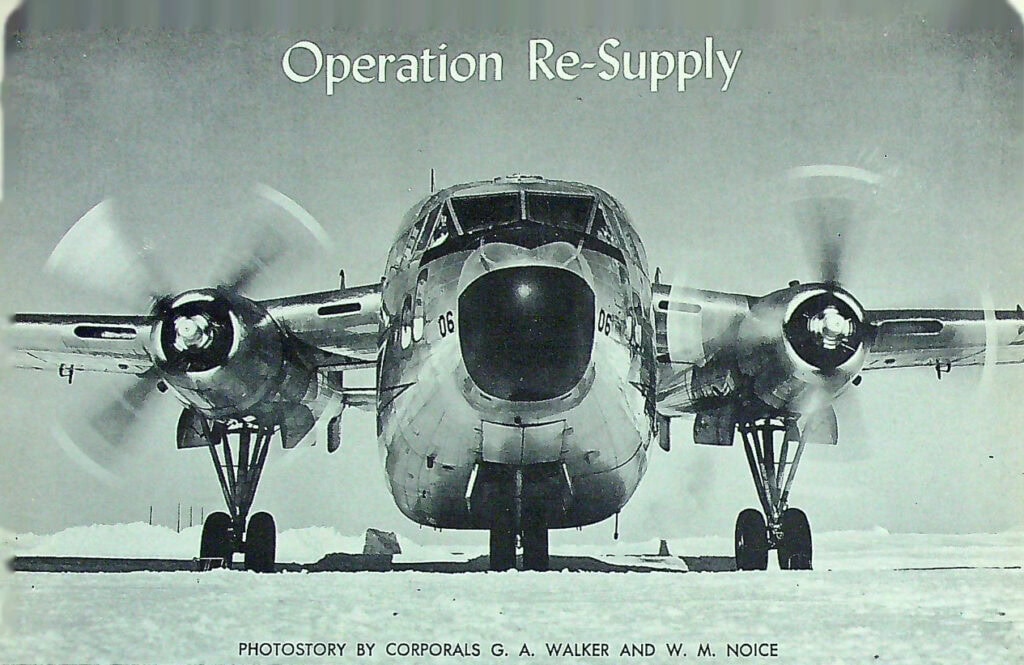
Semi-Annual Arctic Airlift Has Become Routine For A.T.C.
(Reprinted from the June 1959 issue of “Roundel”)
PHOTOSTORY BY CORPORALS G. A. WALKER AND W. M. NOICE
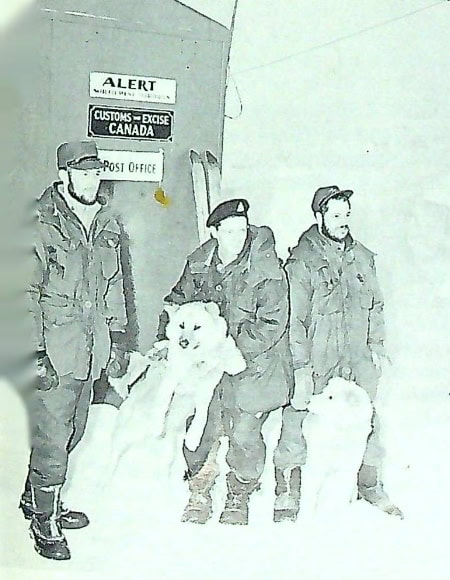
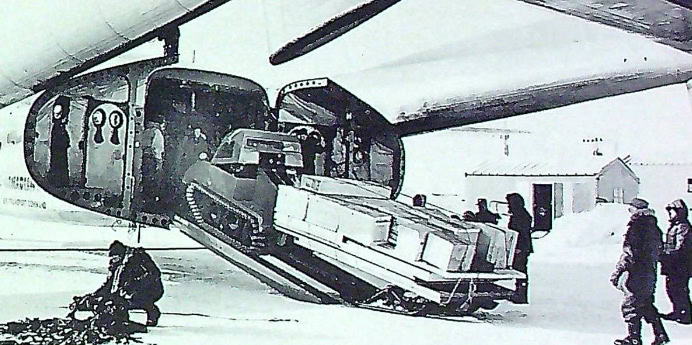
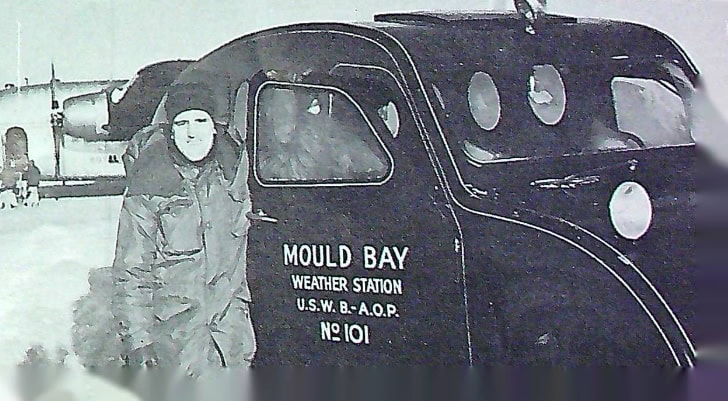
Air Transport Command has again successfully completed spring re-supply of the Canadian and U.S. weather stations across the top of the world. C119 Flying Boxcars from Nos. 435 and 436 Squadrons, based respectively at Namao, Alta., and Downsview, Ont., carried, in a little over a week, a total of nearly one and a quarter million pounds of mixed freight.
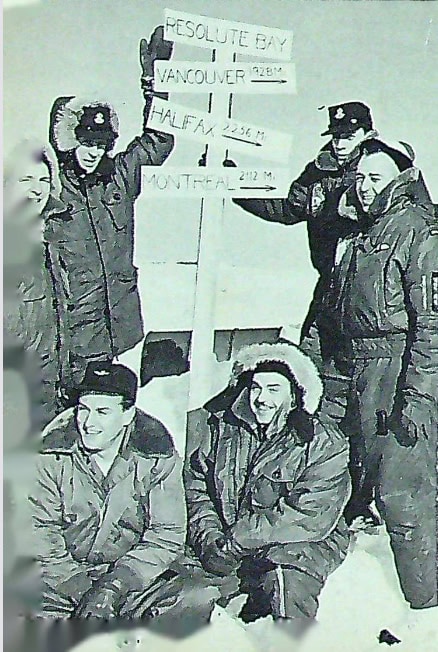
Early in April aircraft and ground maintenance crews of the two squadrons converged on Resolute Bay, to set about the 24-hour-a-day task of re-stocking supplies after the long winter at such isolated bases as Isachsen, Mould Bay, Eureka and Alert.
In charge was Squadron Leader D. R. Miller, a member of 435 Squadron and a veteran of arctic flying, who was bossing his second re-supply operation within a year. Goods stored at Resolute from ships which arrived the previous summer and last minute items ferried in from Churchill, a rail-head and jumping off point 965 miles south, were sorted and prepared for airlift by Flying Officer W. ]. Forbes, officer in charge of air movements at Namao, and his crew of 18 airmen from both 435 and 436 Squadrons.
Timing reflected the urgency of the operation, which had to be completed before thawing rendered frozen landing strips unserviceable. The Flying boxcars flew as much as 16 hours a day each. This feat was accomplished through the use of two air crews and expert maintenance.
Working 12-hour shifts, the ground crews at Resolute serviced aircraft in less than an hour refueling, re-oiling, checking minor defects and re-loading. Flying Officer W. H. Adams headed up the ground maintenance crew of 40 men from the two squadrons. At the destination unit, tractors and sleds were drawn up awaiting the C119’s arrival and every available man pressed into the task of unloading as soon as the clamshell doors were opened and the ramp in place. Turnaround time averaged five minutes.
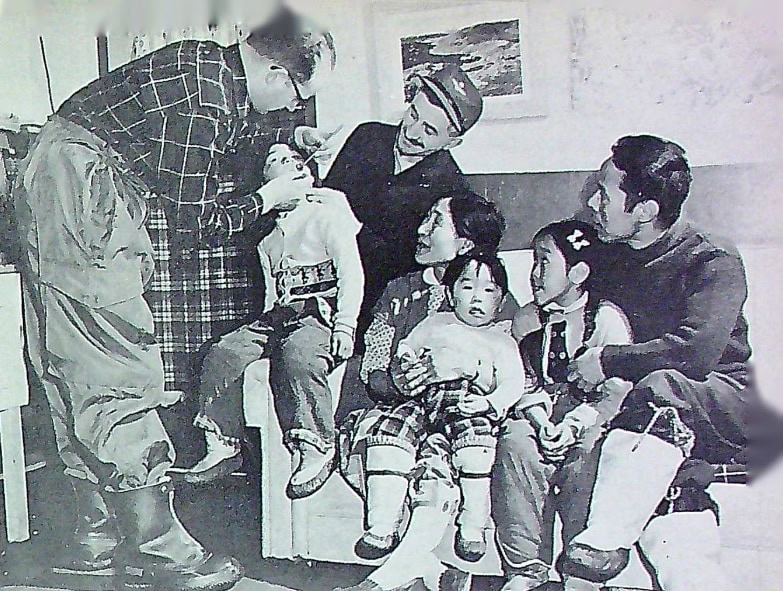
The Canadian Department of Transport and the United States Weather Bureau took advantage of these flights to change personnel. Replacements did not have long to chat with their predecessors before the aircraft headed back to Resolute for another load and another station.